Leak Detection in Fort Worth, TX
Call Us Now and Get Same-Day Service from the Best in Town!



You walk into the kitchen, and the cabinet under the sink feels damp. Or your water bill jumped $40 last month for no obvious reason. Or there's a soft spot in the drywall near the bathroom that you keep meaning to check. In Fort Worth, TX, these warning signs rarely fix themselves, and a hidden leak does more damage the longer it runs.
Rockwater Plumbing's plumbing services in Fort Worth, TX include leak detection that finds the source of the problem, not just the wet spot. Call us at (817) 383-8782 or visit our contact page to schedule service. We're here to answer your call 24/7.
Why Hidden Leaks in Fort Worth Homes Are Different
Thousands of Fort Worth homes sit on slab foundations with plumbing running underneath, and many of them are 30 to 50 years old. That combination produces a few leak patterns we see again and again. A pipe shifts in the clay soil under the slab. A fitting that was barely acceptable 25 years ago finally gives way. Water pressure that runs slightly too high works on a joint for years.
Leak detection is tricky here because the symptom and the source are almost never in the same place. A wet floor in the hallway might trace back to a pipe under the primary bedroom. A mold smell near the laundry room could come from a supply line you can't see from anywhere in the house.
For that reason, our technicians look for where the leak started, not where the water showed up.
What Our Leak Detection Process Looks Like
We Start With the Full Picture
Before any tools come out, the technician walks the home with the homeowner. We talk through water pressure, the age of the plumbing, the fitting types, and any repairs or additions made over the years. Kyle Barnard, Rockwater's founder, calls this "letting the plumbing lead to the plumbing." The visible damage is only where the water ended up, so the diagnosis starts somewhere else.
Non-Invasive Leak Detection Tools
We use acoustic listening equipment, pressure testing, and thermal imaging to locate leaks without opening walls or tearing up floors unnecessarily. Knowing exactly where to go before touching anything matters, because opening the wrong wall costs time and money and leaves the real leak running.
Root Cause, Not Just Location
Once we find the leak, we explain what caused it. It might be a flex line that was due for replacement, a pressure problem that has stressed your pipes for years, or galvanized pipe that has reached the end of its useful life. When whole sections are worn out, a properly done plumbing installation with modern materials gives the home decades of reliable service. You leave the visit understanding the system in your walls, not just holding an invoice.
If We Find It, We Fix It.
Rockwater handles the repair too, so you don't have to hunt for another contractor. Whether the leak is under the slab, in a wall, at a supply line, or at a failing fitting, our crew handles the plumbing repairs from start to finish.
What Our Leak Detection Process Looks Like
We Start With the Full Picture
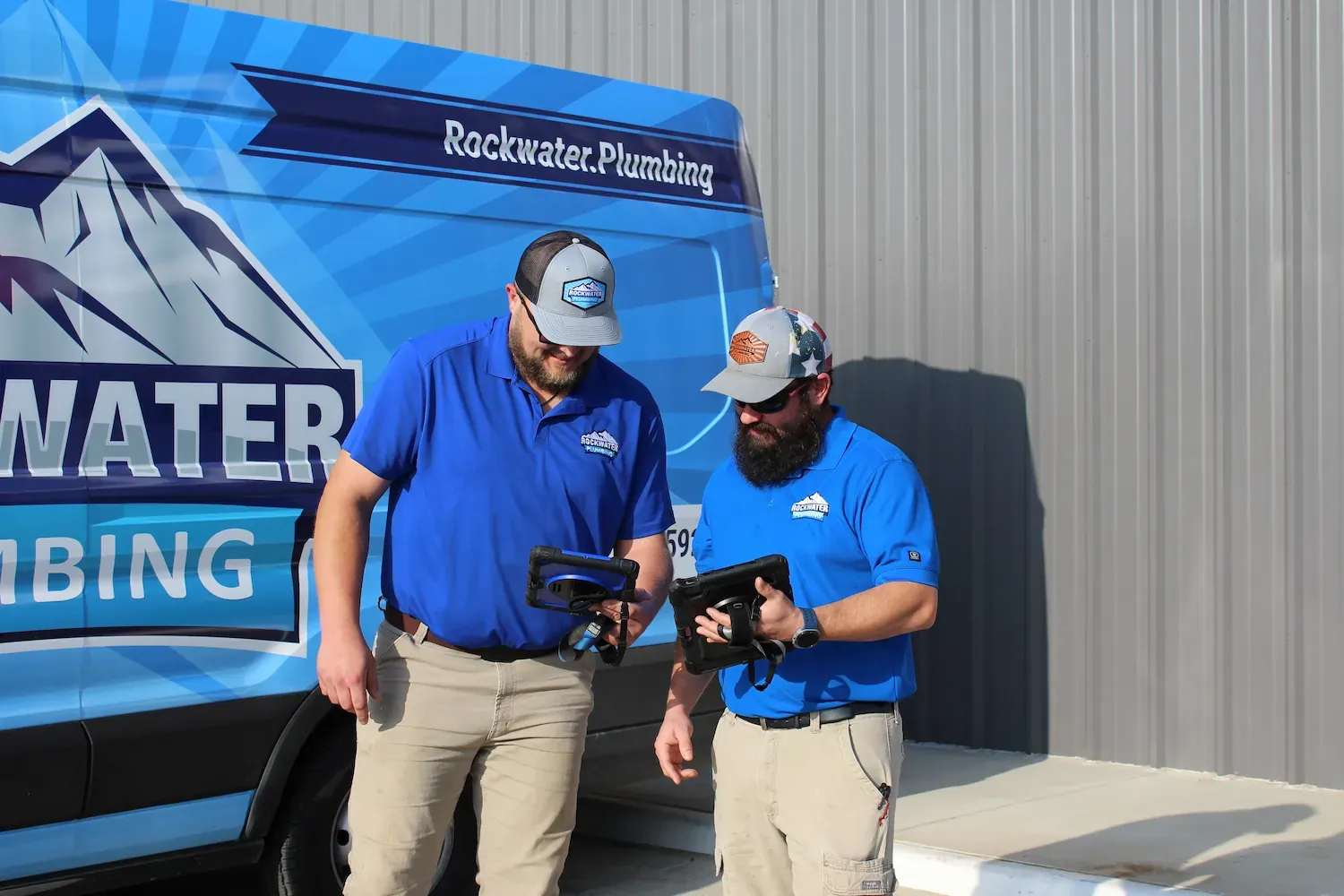
Before any tools come out, the technician walks the home with the homeowner. We talk through water pressure, the age of the plumbing, the fitting types, and any repairs or additions made over the years. Kyle Barnard, Rockwater's founder, calls this "letting the plumbing lead to the plumbing." The visible damage is only where the water ended up, so the diagnosis starts somewhere else.
Non-Invasive Leak Detection Tools
We use acoustic listening equipment, pressure testing, and thermal imaging to locate leaks without opening walls or tearing up floors unnecessarily. Knowing exactly where to go before touching anything matters, because opening the wrong wall costs time and money and leaves the real leak running.
Root Cause, Not Just Location
Once we find the leak, we explain what caused it. It might be a flex line that was due for replacement, a pressure problem that has stressed your pipes for years, or galvanized pipe that has reached the end of its useful life. When whole sections are worn out, a properly done plumbing installation with modern materials gives the home decades of reliable service. You leave the visit understanding the system in your walls, not just holding an invoice.
If We Find It, We Fix It.
Rockwater handles the repair too, so you don't have to hunt for another contractor. Whether the leak is under the slab, in a wall, at a supply line, or at a failing fitting, our crew handles the plumbing repairs from start to finish.
Warning Signs That You Have a Hidden Leak
If any of these sound familiar, a call now can keep a small problem from getting expensive:
- Water bill higher than usual with no change in usage
- Low water pressure throughout the house or at specific fixtures
- The sound of running water when everything is shut off
- Warm spots on the floor that weren't there before (common with slab leaks)
- Mold or mildew smell without visible moisture
- Damp or discolored drywall or flooring
- A water meter that moves after you've shut off every fixture
None of these is a guaranteed diagnosis, but each one means something is happening in your plumbing that's worth looking at.
A Slab Leak Near Ridglea
Many plumbing companies send a tech to the symptom: find the wet spot, open the wall, replace the obvious section, and close the ticket. That often works until a second leak appears in a different spot months later, because the first fix never addressed the pressure problem or the corroded supply line behind it.
We recently fixed a slab leak in a home near Ridglea. Our detection work showed that the failed pipe was part of a run that two other companies had already repaired, each time at the point of failure instead of upstream, where the pressure problem was. The homeowner had paid to fix the same leak three times in five years. Our repair included a pressure-reduction recommendation that ended the cycle.
Serving Fort Worth Neighborhoods and Surrounding Areas
Our Fort Worth location is on Edwards Ranch Road near the TCU area, and we run calls across the city and into the surrounding DFW communities. We're regularly in Tanglewood, Westover Hills, Mistletoe Heights, Ridglea, and the Medical District, as well as newer developments to the south and west. Homeowners in these neighborhoods count on our residential plumbing services for everything from routine fixes to full-system work. Homes near the Cultural District often have 1970s and 1980s plumbing that is entering its highest-risk years for leaks.
We also serve Arlington, Southlake, Burleson, Mansfield, and communities throughout the Metroplex.
Book an Appointment
Frequently Asked Questions About Leak Detection in Fort Worth
How do I know if I have a slab leak?
The most common signs are warm spots on the floor, the sound of water running when everything is off, and new cracks in tile or flooring. A sudden jump in your water bill is also a strong indicator. Slab leaks are common in Fort Worth homes built on clay soil, since the ground shifts with the seasons and stresses the pipes. If you suspect one, don't wait, because a running slab leak keeps damaging the foundation and the structure above it.
Is leak detection invasive? Will you tear up my floors?
No. We use acoustic equipment and pressure testing to locate the leak before opening anything up. When we do need to reach a pipe, we go in at the right spot, not the nearest one, to keep disruption to your home low.
Can you find a leak without knowing where it is?
Yes, and most homeowners call us with symptoms, not a location. We bring the equipment and process to narrow it down, and most of the time we can identify the source without opening a single wall.
Do you handle emergency leak calls?
Yes. Rockwater is available 24/7. If water is running where it shouldn't be, call us at (817) 383-8782.
Ready to Find and Fix That Leak?
If something in your Fort Worth home points to a leak, getting a professional on-site early can keep drywall from turning into a mold problem or a slow drip from becoming structural damage.
Rockwater Plumbing is available 24 hours a day, seven days a week. Call (817) 383-8782 or visit our contact page to schedule service.